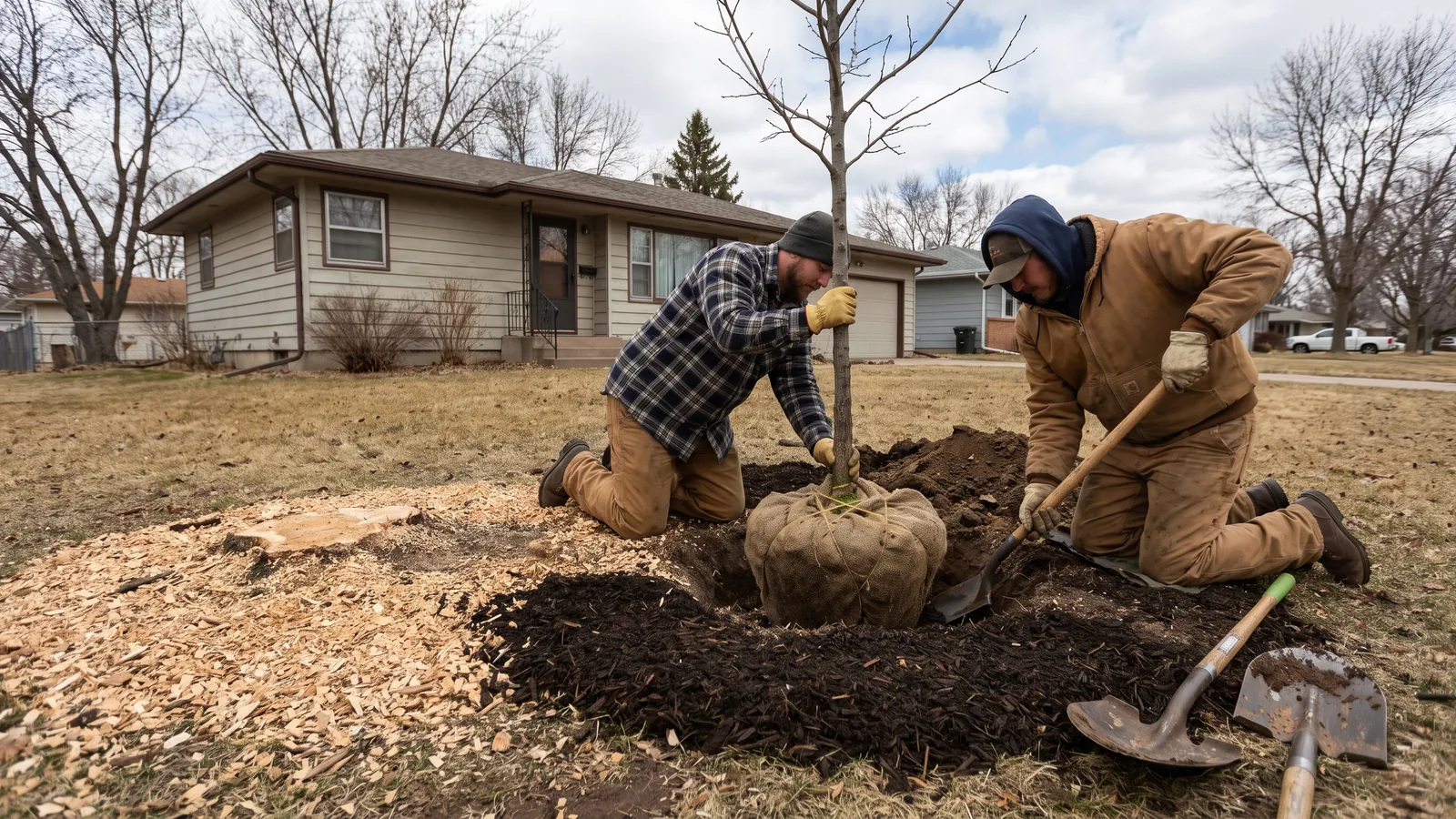
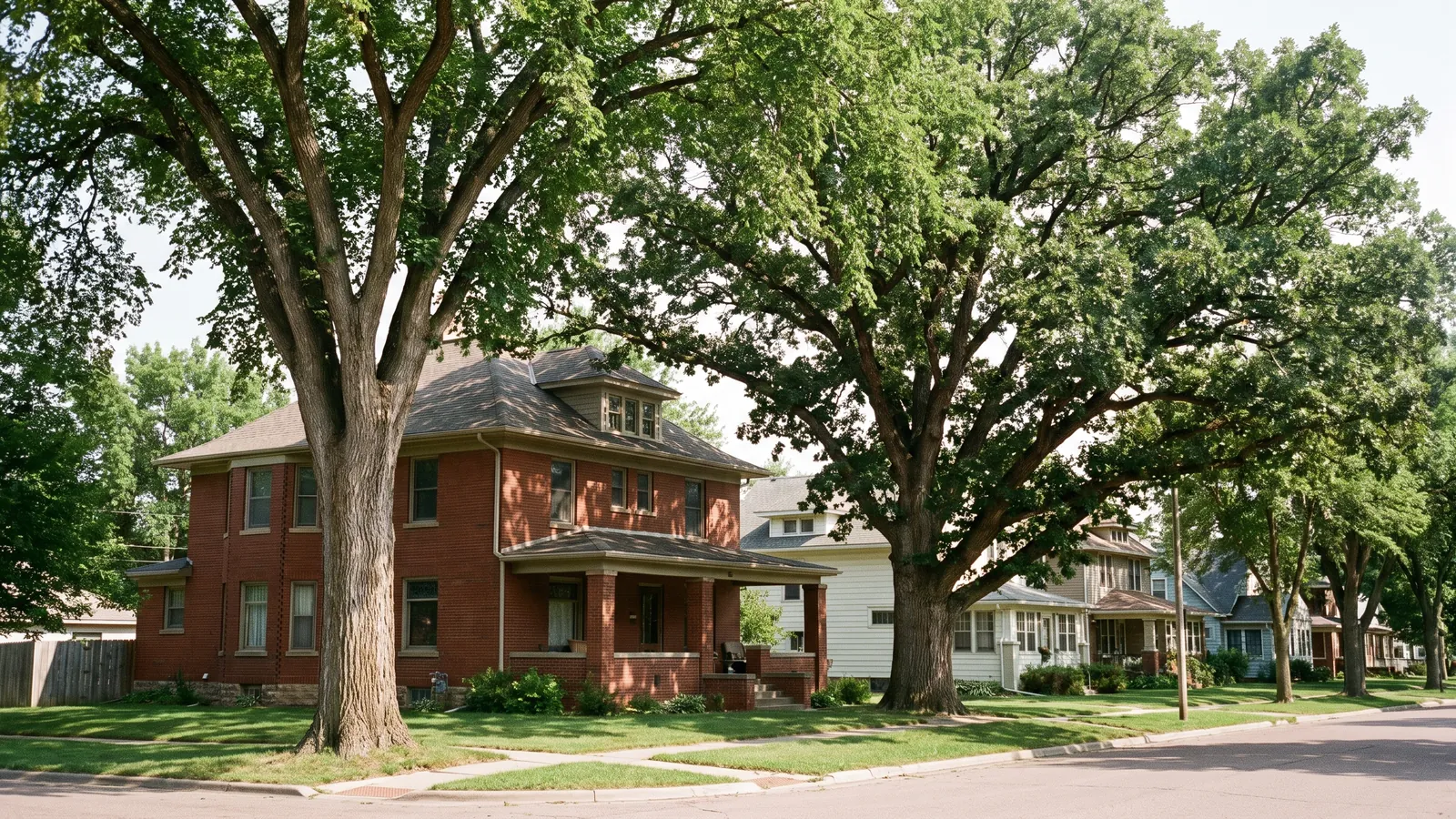
The lesson of the last 60 years in Sioux Falls is diversity. The elms that lined the streets were lost to Dutch elm disease, which reached South Dakota in 1967. They were largely replaced with ash, and ash made up about 40 percent of the city's trees when emerald ash borer arrived. The City banned planting ash in 2018, and its street-tree guide says some approved species may be denied at certain locations for species-diversity reasons. When we replace an ash, we plant something different from what's already on the block.
The City's approved street-tree list is a good shortlist for yards too. It includes American, littleleaf and silver linden; common hackberry; hybrid elms such as Accolade and Danada Charm, Discovery Japanese elm and Prospector Wilson elm; bur oak, swamp white oak, northern red oak and northern pin oak (Majestic Skies); Kentucky coffeetree; thornless honeylocust; and others such as ginkgo (male only), Ohio buckeye and American yellowwood. Pin oak isn't recommended here. The guide flags hackberry, honeylocust and Kentucky coffeetree for disturbed soils or new developments with less than 8 inches of healthy soil. The 2023 USDA hardiness map shifted much of southern South Dakota into zone 5a, with typical winter lows of −15 to −20°F, but we still plant for the hard winters.
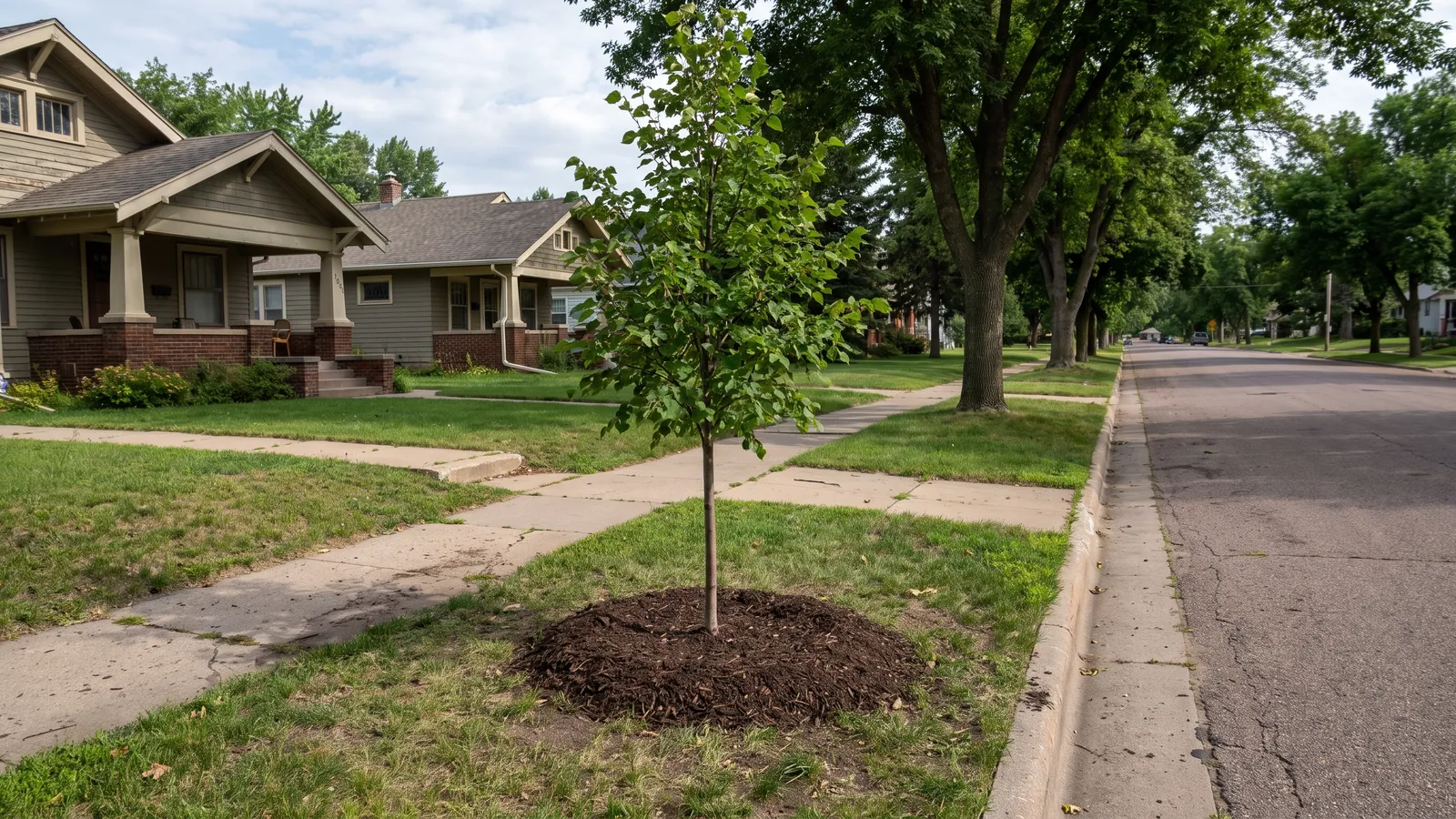
For a boulevard tree, the paperwork comes first. A Street Tree Planting Permit has been required by ordinance since October 2018, and nothing goes in the ground until City staff sign and return it. The tree has to be at least 3 feet from the curb, 40 feet from other street trees, 10 feet from driveways and hydrants and 15 feet from streetlights. With an approved permit, the City's Street Tree Voucher Program pays $100 per tree. We call 811 before we dig, as the City says state law requires. We plant at the right depth with the root flare at grade, mulch the ring and leave watering instructions for the first two summers.
What's included
Species for diversity
Picked from the City's list, and different from what's already on your block.
Boulevard permit
Street Tree Planting Permit filed and signed before we dig; the $100 voucher applied.
811 before digging
A One Call locate at least 48 hours ahead, as state law requires.
Planted at the right depth
Root flare at grade, wire and burlap off the top of the ball, backfilled with native soil.
Mulch and stake
A wide mulch ring, staked only if the site is windy, and stakes removed after a year.
First-two-summers care
Watering instructions, plus a structural prune in year two or three.
Tree planting cost in Sioux Falls, SD
| Job | Typical price | Notes |
|---|---|---|
| 1.5–2 in caliper tree, planted | $350 – $650 | Most boulevard and yard trees |
| 2.5–3 in caliper tree, planted | $600 – $1,100 | Bigger start, more care |
| Evergreen, 5–6 ft, planted | $300 – $600 | Screening and windbreak gaps |
| Stump grind and replant in the same spot | + $150 – $350 | Chips removed, topsoil added |
| City Street Tree Voucher | − $100 per tree | With an approved planting permit |
| Young-tree structural pruning, year 2–3 | $100 – $250 | Sets up a strong leader |
These are 2026 Sioux Falls ranges to help you budget. Your written price is itemized (climb or bucket work, rigging, chipping and haul-off, stump grinding, crane time) and good for 30 days.
Recent work
Questions we get about tree planting
Can I plant an ash to replace my ash?
No. Sioux Falls has banned planting ash since September 2018.
What should I plant instead?
Something different from what's already nearby. Linden, hackberry, Kentucky coffeetree, honeylocust, bur oak, swamp white oak and disease-resistant elms such as Accolade and Discovery are all on the City's street-tree list.
Do I need a permit to plant on the boulevard?
Yes, a Street Tree Planting Permit, which the City describes as free. Don't dig until City staff sign and return it. File it online, in person at Parks and Recreation at 231 N Dakota Ave, or by mail.
Does the City help pay for street trees?
Yes. The Street Tree Voucher Program pays $100 per approved tree with an approved planting permit. In low-canopy areas, the CommuniTree program plants free street trees for eligible homeowners through spring 2027.
When is the best time to plant?
Spring after the ground thaws and early fall. Fall planting gives roots a head start before the next summer's heat.
How much should I water a new tree?
Deeply, about once a week in dry weather for the first two summers, more in heat and drought. We leave written instructions.