The storm log
- April 9, 2013: ice stormHalf an inch of freezing rain at 30 to 31 degrees and a 51 mph gust brought down numerous limbs and some whole trees. The City's cleanup, "Operation Timber Strike," took more than two months and cost millions; a later Argus Leader report put debris management at $8 million.
- April 10–12, 2019: blizzard and ice0.37 inch of ice at Sioux Falls and 0.50 at Hartford, a 59 mph gust at the airport and numerous outages.
- September 10, 2019: tornadoesThree brief EF-2 tornadoes near the Western Mall, Avera Heart Hospital and 69th and Western, with 80 to 100 mph straight-line winds around them. Up to 25,000 Xcel customers lost power. FEMA reimbursed the City for clearing more than 2,000 cubic yards of vegetative debris.
- May 12, 2022: derecho78 mph three miles south-southwest of Sioux Falls, 81 near Colton, 107 at Tripp, and a tree on a house just south of the city. The NWS says only one other severe event nationwide since 2004 produced more reported gusts of 75 mph or more.
- July 5, 2022: derecho80 mph at the airport with gusts over 58 mph for 31 minutes; trees down east of the airport and at 31st and Euclid. The City opened a wood-debris site and waived landfill fees for storm debris.
- July 28, 2025: derecho66 mph at the airport, 68 near Tea and Harrisburg.
- July 25, 2026: windstorm72 mph at the airport, 81 west of Harrisburg and southwest of Tea, 92 on a personal station in Tea; numerous trees down in Canton, damage in Brandon and Harrisburg.
Which trees fail
The trees that come down in Sioux Falls storms are mostly predictable. Dead and declining ash are first. Their wood is brittle, and the City says so. Next are big, weak-wooded silver maples and cottonwoods with heavy limbs over houses. Then come trees with two competing trunks joined in a tight V, which split at the fork. Spruce with thin, cankered lower crowns and dead tops come next, and so does any tree with root damage from construction or a recent trench. Ice adds its own failures: long horizontal limbs and trees that were never thinned. Healthy, well-structured trees mostly ride it out.
Before the next storm
- Get dead and declining ash down between Labor Day and Memorial Day, before they're standing deadwood in July.
- Have deadwood and heavy limbs over the roof, driveway and play areas removed or reduced.
- Have young trees structurally pruned so they grow one strong leader.
- Look for cracks, cavities, mushrooms at the base and new leans after every storm.
- Keep the service drop clear; call Xcel if a tree is growing into it.
After a storm
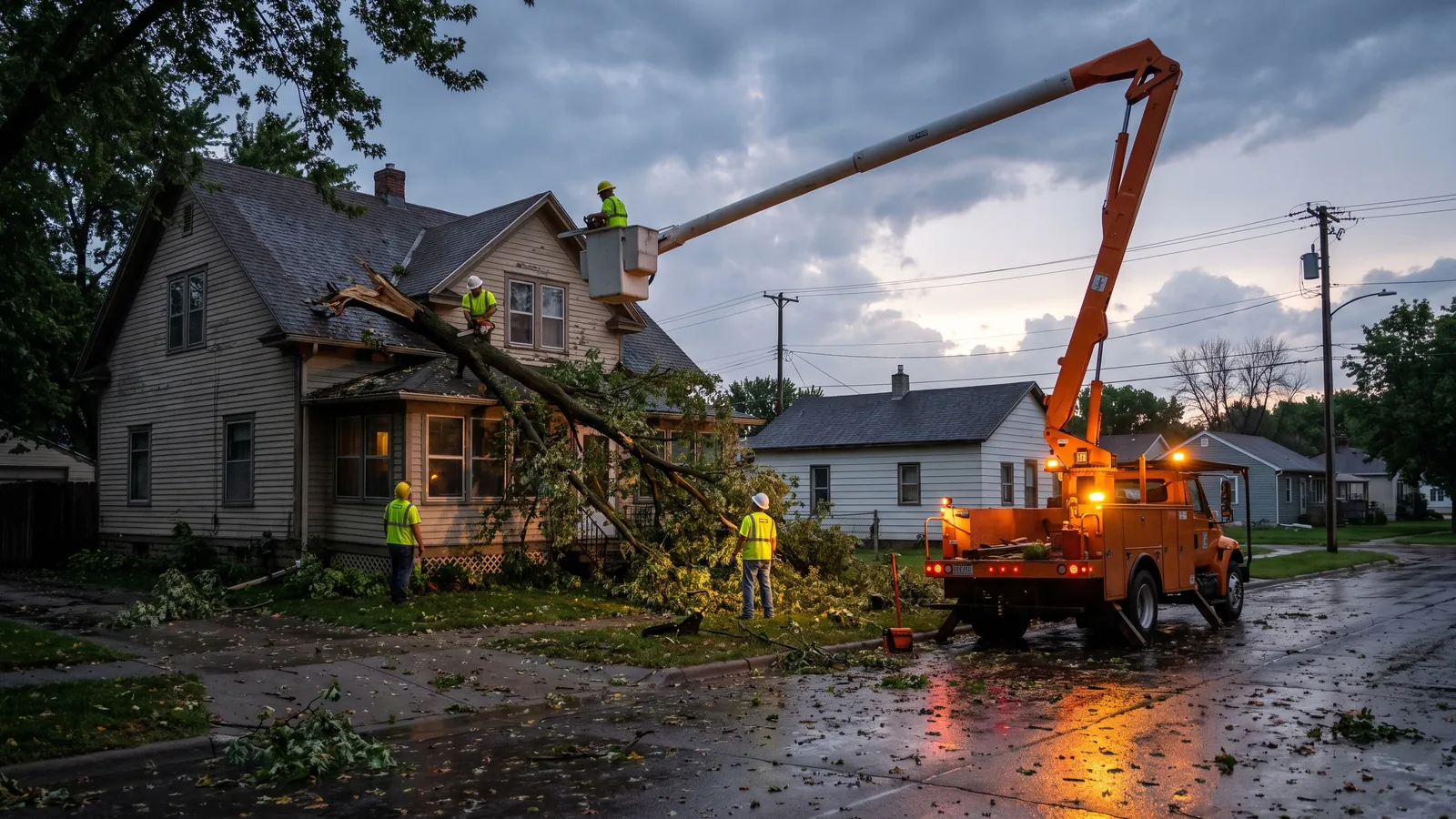
Stay away from downed lines. If a tree touching an overhead line is arcing or sparking, call 911. Report public-tree branches bigger than 6 inches across or 20 feet long through the City app, online or the police non-emergency line at 605-367-7000. City Forestry removes trees that fall from public property at no cost. It clears private-tree debris only where it blocks the right-of-way, and it doesn't take private trees cut and piled on the boulevard. For anything else, call us. See emergency tree service and storm cleanup.
Common questions
Which trees should come down before storm season?
Dead and declining ash first, then big trees with cracked or split forks, large dead limbs over the house, and spruce that are dead at the top.
Does the City clean up after storms?
For public trees, yes. For private trees, only where debris blocks the right-of-way. After major storms the City has sometimes opened temporary wood-debris sites and waived landfill fees.
Is a leaning tree dangerous?
A tree that has always leaned is often fine. A tree that started leaning after a storm, especially with cracked soil or lifted roots on the far side, is dangerous and should be looked at right away.
Can ice-damaged trees recover?
Many can, with proper pruning of broken limbs. Trees that lost most of their crown or split at the trunk usually can't.
Related: Emergency tree service · Storm cleanup · Tree removal cost · Insurance and financing